Your Complete Guide to Worker Protection and Employer Compliance in 2025
Navigating the complex landscape of employment rights Ireland can be challenging for both workers and employers. Whether you’re a new employee seeking to understand your entitlements or a business owner striving to maintain compliance, this comprehensive guide will walk you through everything you need to know about Irish employment law in 2025.
Understanding Irish Employment Law: The Foundation of Worker Protection
Ireland’s robust employment legislation provides extensive protection for workers while establishing clear obligations for employers. The Irish employment law framework has evolved significantly in recent years, particularly with updates to minimum wage rates, enhanced parental leave provisions, and strengthened worker protection mechanisms.
These developments have made Ireland an increasingly attractive destination for both employees and businesses, creating a balanced approach that safeguards worker rights while supporting business growth. The legal framework encompasses multiple acts and regulations that work together to ensure fair treatment in the workplace.
Understanding these fundamental laws is crucial for anyone working in or operating a business in Ireland, as they form the cornerstone of workplace relations and legal compliance.
Your Essential Employment Rights as an Irish Worker
Every employee in Ireland is entitled to comprehensive protection under the law. These rights are non-negotiable and apply regardless of your employment status, nationality, or length of service.
Written Employment Contracts and Documentation
One of your most fundamental rights is receiving proper documentation of your employment terms. Within five days of starting any role, you should receive a written employment contract detailing crucial information including:
Your rate of pay and payment schedule
Normal working hours and overtime arrangements
Notice periods for termination
Sick leave entitlements and procedures
Holiday allowances and booking procedures
This “Day 5 Statement” requirement ensures transparency from the beginning of your employment relationship and provides legal protection for both parties.
Current Minimum Wage and Payment Rights
As of 2025, the minimum wage in Ireland stands at €13.50 per hour for adult employees . This represents one of the highest minimum wage rates in Europe and reflects Ireland’s commitment to ensuring fair compensation for all workers.
Additional Payment Rights Include:
Detailed payslips showing all deductions
Protection against unlawful wage deductions
Overtime compensation as per contract terms
Proper handling of tips and service charges under the Payment of Wages Act 2022
Working Time Protections and Break Entitlements
The Organisation of Working Time Act 1997 provides comprehensive protection against excessive working hours and ensures adequate rest periods. Key provisions include:
Maximum 48-hour average working week
Minimum 11 consecutive hours rest between shifts
24-hour rest period each week
Specific break entitlements during long shifts
Protection against forced overtime
Leave Entitlements: Annual, Sick, and Family Leave
Irish law provides generous leave provisions that support work-life balance:
Annual Leave: Minimum four weeks paid leave per year (equivalent to 8% of hours worked)
Public Holidays: Nine recognized public holidays with entitlement to time off or premium pay
Sick Leave: Statutory sick pay provisions for eligible employees
Parental Leave: Comprehensive maternity, paternity, and adoptive leave provisions
Family Leave: Unpaid leave options for family care responsibilities
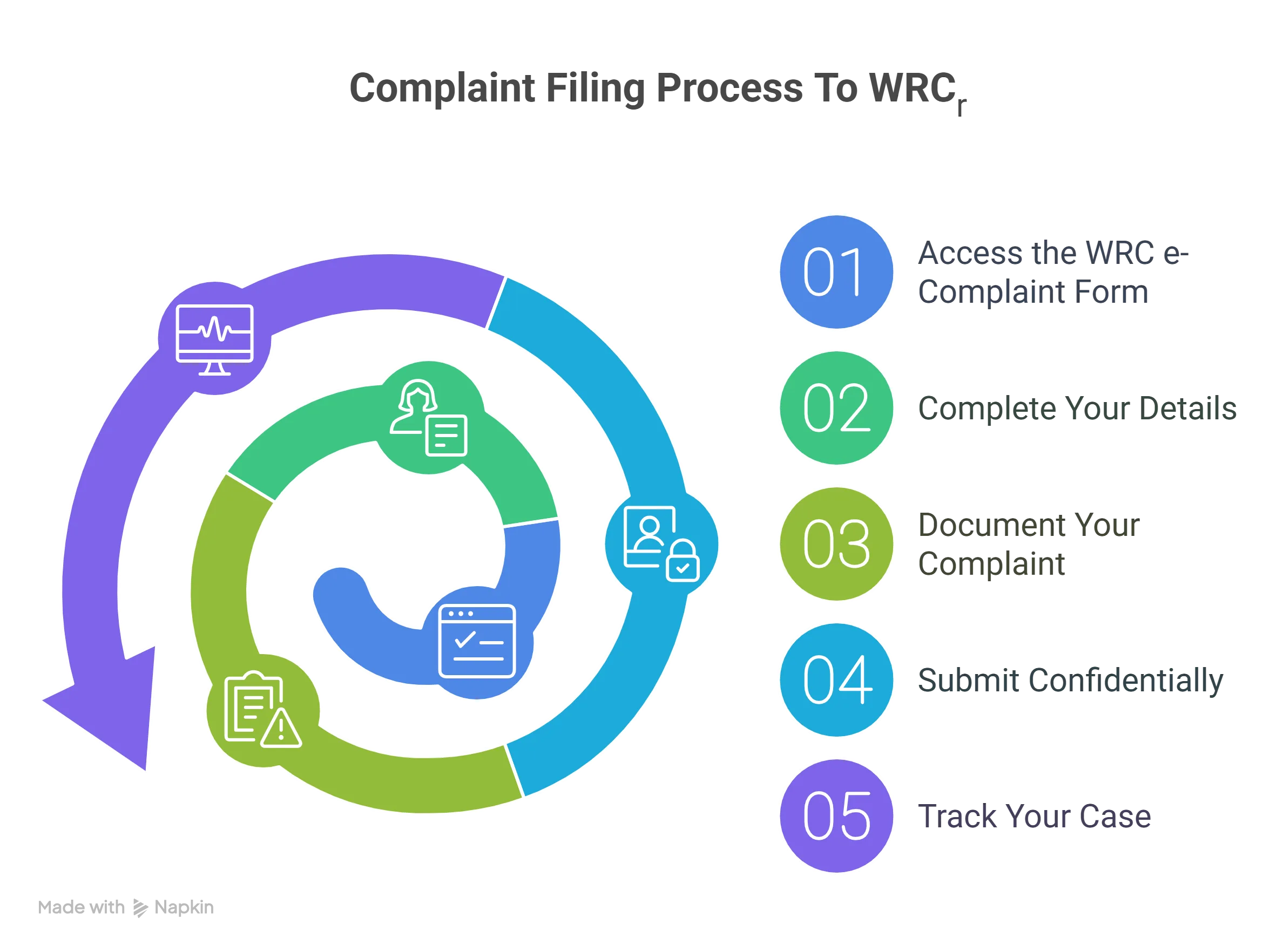
How to File Employment Complaints: A Step-by-Step Guide
The Workplace Relations Commission (WRC) provides an accessible, confidential platform for addressing employment disputes through their innovative e-Complaint system.
The Simple Online Filing Process
Filing a complaint about employment rights violations has never been easier:
Access the WRC e-Complaint Form: Available 24/7 online for maximum convenience
Complete Your Details: Provide your information and employment details
Document Your Complaint: Detail the violation with supporting evidence
Submit Confidentially: The system protects your identity and prevents employer retaliation
Track Your Case: Monitor progress through the online portal
Confidentiality and Protection Against Retaliation
Irish law provides robust protection against employer retaliation for filing legitimate complaints. The confidential nature of the process means you can:
File complaints anonymously when appropriate
Receive protection even after leaving employment
Access expert guidance throughout the process
Maintain your professional reputation while seeking justice
Real Compensation Cases: Evidence That the System Works
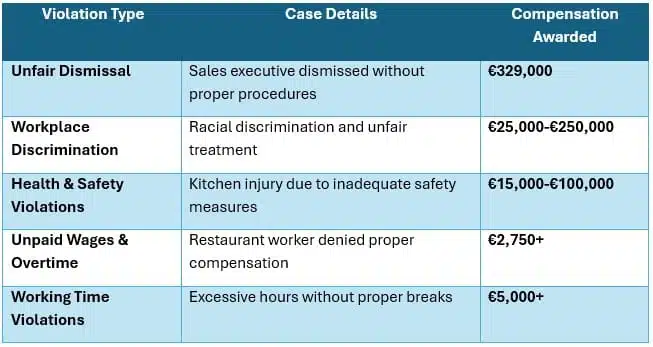
The WRC database contains numerous examples of successful employee claims, demonstrating that filing complaints can result in substantial compensation:
High-Value Compensation Examples
These real cases demonstrate that the Irish employment rights system provides meaningful redress for violations, with compensation reflecting the seriousness of employer breaches.
Common Successful Claim Categories
Contract Violations: Failure to provide written terms often results in €1,200+ awards
Wage Issues: Minimum wage violations can lead to €3,000-€15,000 compensation
Tip Misuse: Service charge disputes typically result in €2,500-€10,000 awards
Leave Denials: Sick leave violations often generate €4,500+ settlements
Employer Obligations: Staying Compliant and Avoiding Penalties
Understanding employer obligations is crucial for business owners who want to avoid costly disputes and create positive workplace environments.
Essential Documentation Requirements
Every Irish employer must maintain comprehensive employment documentation:
Basic information about pay, hours, and key policies
Monthly Requirements (Within 30 Days):
Complete written employment contract
Detailed terms and conditions document
Employee handbook with company policies
Payroll and Payment Compliance
Accurate payroll management is fundamental to employment law compliance and helps prevent the majority of employee complaints.
Key Requirements Include:
Itemized payslips showing all deductions
Proper tax and social insurance registration
Accurate record-keeping for hours worked
Transparent handling of tips and service charges
Timely payment of wages and overtime
Health and Safety Obligations
The Safety, Health and Welfare at Work Act 2005 places comprehensive obligations on employers:
Risk assessment and hazard identification
Provision of appropriate safety equipment
Employee training and safety induction
Accident reporting and investigation procedures
Regular safety audits and improvements
Failing to meet health and safety standards can result in both WRC claims and separate prosecution by the Health and Safety Authority, making compliance essential for business sustainability.
Leave Management and Statutory Entitlements
Proper leave management prevents disputes and ensures employee wellbeing:
Annual Leave Management:
Accurate accrual calculations
Fair scheduling systems
Proper payment during leave periods
Clear booking procedures
Statutory Leave Compliance:
Maternity leave: 26 weeks with potential extensions
Paternity leave: Two weeks for new fathers
Parental leave: Unpaid leave for childcare
Sick leave: Statutory sick pay for eligible employees
Industry-Specific Challenges and Solutions
Certain industries face particular challenges in maintaining employment law compliance, with hospitality and retail sectors showing higher rates of violations.
Restaurant and Hospitality Sector Issues
The food service industry frequently sees violations including:
Excessive working hours without proper breaks
Tip pooling and service charge disputes
Casual contract abuse
Health and safety violations in kitchen environments
Retail and Service Industry Challenges
Common issues in retail environments include:
Zero-hour contract misuse
Unpaid overtime and break violations
Discrimination and harassment issues
Inadequate training and safety provisions
Getting Professional Help: When to Seek Expert Guidance
While the WRC system is designed to be accessible, complex cases often benefit from professional guidance to ensure the best possible outcomes.
For Employees:
Maximizing Your Claim Success
Professional assistance helps employees by:
Ensuring all relevant violations are identified
Properly documenting evidence and timelines
Navigating complex legal procedures
Maximizing potential compensation awards
For Employers:
Proactive Compliance Management
Business owners benefit from expert guidance through:
Employment contract drafting and review
Payroll system setup and maintenance
Policy development and implementation
Training programs for management staff
Recent Updates and Future Trends in Irish Employment Law
Irish employment law continues to evolve, with recent updates focusing on enhanced worker protection and improved work-life balance provisions.
2025 Key Updates
Minimum wage increase to €13.50 per hour
Enhanced sick pay provisions
Improved parental leave entitlements
Strengthened tip protection legislation
Emerging Trends
Remote Work Legislation: New regulations addressing the rights of remote workers and hybrid working arrangements
AI and Workplace Monitoring: Emerging protections against excessive digital surveillance
Gig Economy Rights: Developing protections for platform workers and freelancers
Conclusion: Creating Fair Workplaces Through Understanding and Compliance
Understanding employment rights in Ireland benefits everyone – workers gain protection and fair treatment, while employers avoid costly disputes and create positive workplace cultures.
The key to success lies in proactive education and compliance. Workers should understand their rights and feel confident about raising concerns when necessary. Employers should view compliance not as a burden but as an investment in their business’s long-term success and reputation.
Whether you’re an employee seeking to protect your rights or an employer committed to best practices, staying informed about Irish employment law is essential for navigating today’s complex workplace environment.
Remember that employment law exists to create balance and fairness in workplace relationships. By understanding and respecting these rights and obligations, we can build stronger, more productive workplaces that benefit everyone involved.